Regional Phillips Curve in a Small Open Economy: Evidence from Bolivia
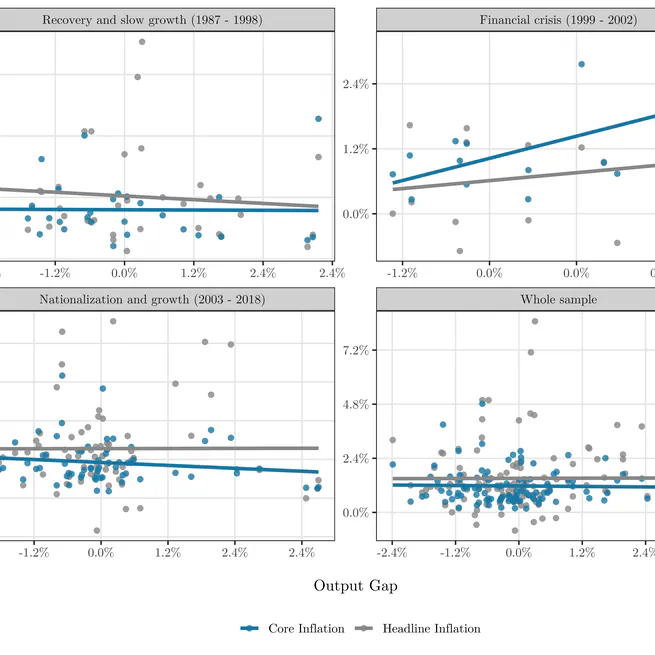
This paper estimates the relationship between inflation and the output gap at the departmental level in Bolivia, using quarterly data for the period 1993–2019. Despite substantial subnational variation, the association between inflation and economic slack is small and statistically indistinguishable from zero. This result holds across multiple specifications, including estimators that control for common factors and allow for regional heterogeneity. Even when separating tradable and non-tradable inflation, the relationship remains weak. The evidence suggests that inflation dynamics in Bolivia exhibit a strong common component and limited sensitivity to regional cyclical conditions, with important implications for understanding monetary policy transmission in a context of elevated inflation and institutional constraints.
Feb 27, 2026
Can the Central Bank of Bolivia control inflation?
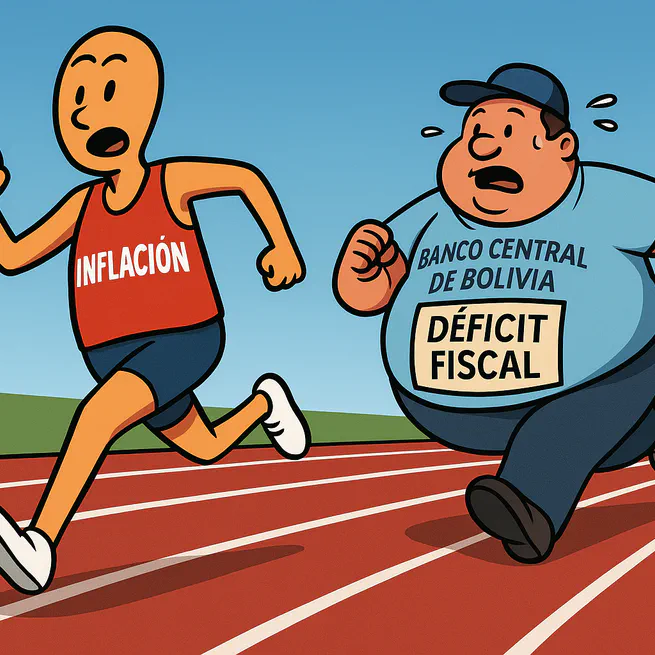
Since late 2023, Bolivia has been experiencing an accelerated and widespread inflationary process, with year-on-year inflation reaching 23.96% in June 2025 and sharp increases in both tradable goods —affected by the dual exchange rate— and non-tradables, as well zas core inflation. The persistent fiscal deficit, financed by the Central Bank through monetary issuance, has weakened the exchange rate regime, eroded institutional credibility, and limited the BCB's ability to control inflation. Without credible fiscal consolidation and the restoration of the Central Bank's autonomy, inflationary pressures will continue to intensify.
Jun 10, 2025