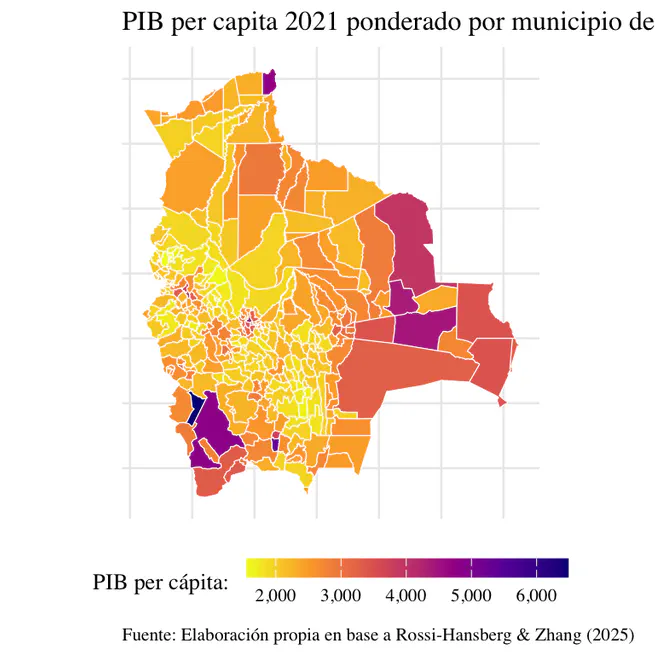
New Municipal-Level GDP Estimates for Bolivia
Researchers Rossi-Hansberg & Zhang (2025) from the Becker Friedman Institute have estimated GDP and per capita income at the subnational level worldwide from 2012 to 2021 using machine learning techniques and high-resolution data. This tool represents a key advancement for developing countries like Bolivia, where lack of data hampers policy evaluation. Applying this data at the municipal level reveals important patterns in income distribution, especially in border and urban regions. These estimates open the door to more precise research and better-informed public policy decisions.
Apr 2, 2025
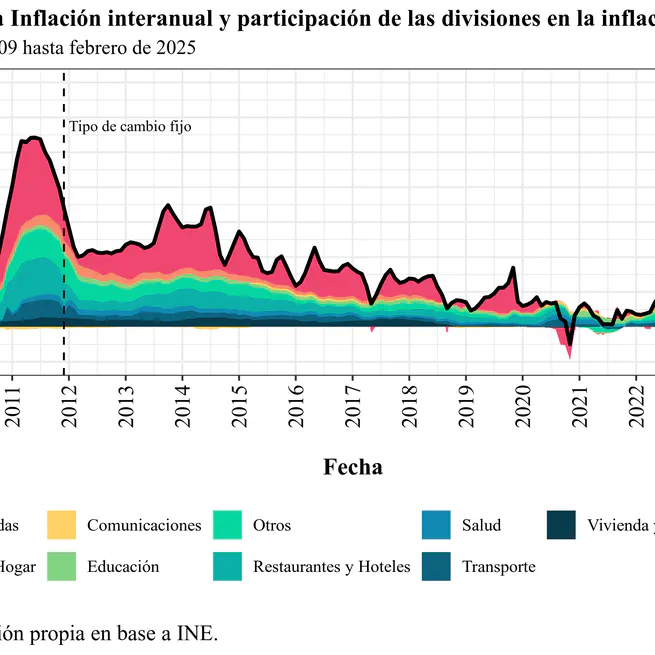
Bolivia: Between inflation and the lack of Central Bank independence
Bolivia is facing a macroeconomic crisis marked by rising inflation, a loss of international reserves, and a persistent fiscal deficit. After years of stability driven by high commodity prices, since 2014 the country has experienced a drop in gas export revenues, leading the Central Bank of Bolivia (BCB) to finance the government's deficit through monetary issuance. This has generated distrust in the national currency, a parallel dollar market, and unanchored inflation expectations. The lack of BCB independence worsens the situation, as it acts more like an arm of the Executive than an autonomous institution. To restore stability, fiscal discipline and central bank independence are needed—and ultimately, dollarization may need to be considered if trust in monetary policy cannot be restored.
Mar 9, 2025
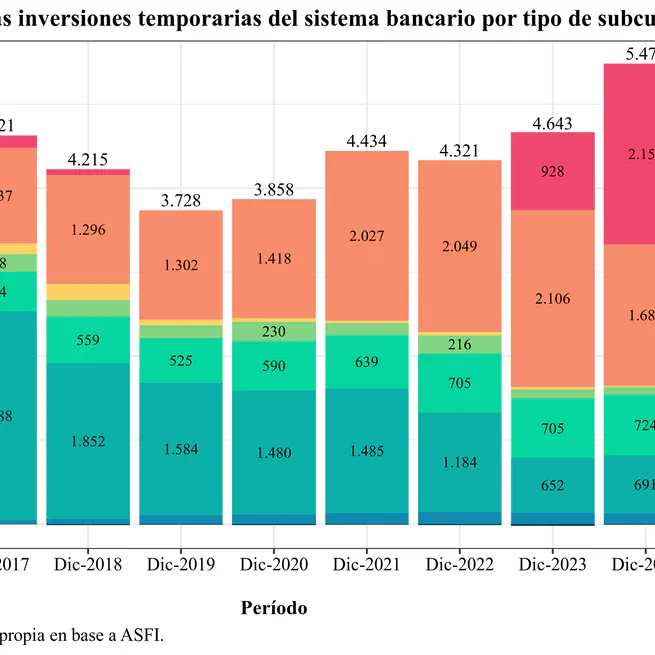
Banking in Bolivia in 2024: The BCB Takes a Greater Role
Bolivia is facing a progressive economic crisis that is increasingly reflected in its financial system. The banking sector’s balance sheet expanded by USD 1.443 billion in 2024, driven by an increase in local currency liquidity and a slowdown in credit portfolios (5% annual). Banks have increased their liquidity by shifting funds from temporary investments to cash holdings, while their dependence on the Central Bank of Bolivia (BCB) continues to rise. Deposits are still growing, albeit at a slower pace. Non-performing loans have slightly decreased to 3.2%, but remain elevated, with 15% of the portfolio still under restructuring. Profitability is gradually improving but remains below pre-pandemic levels. However, persistent macroeconomic fragility—marked by twin deficits, a dollar shortage, and high inflation—poses significant risks to the financial sector’s stability and its ability to fund the real economy.
Feb 21, 2025