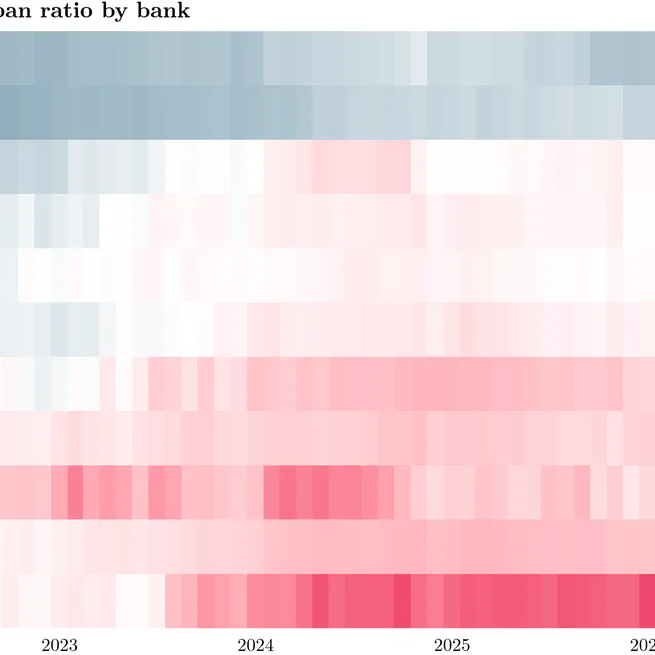
Banking in Bolivia as of September 2026: Nominal Expansion, Short-Term Liquidity, and Greater Exposure to the Public Sector
As of September 2026, Bolivia's banking system continues to record nominal balance-sheet growth of 11.6% year on year, driven primarily by long-term investments (+57.4%) and short-term investments (+36.5%), while cash and cash equivalents grew by 1.9%. By contrast, the loan portfolio increased by only 4.7%. The asset structure reveals a greater allocation of funds to instruments issued by the Central Bank of Bolivia and the public sector. On the funding side, current accounts (+20.3%), savings deposits (+24.3%), and term deposits (+12.2%) all increased, although the stronger growth of more liquid deposit instruments suggests a shift toward more volatile funding sources. The shares of foreign-currency assets and liabilities reached 9.3% and 9.6%, respectively, above the levels observed a year earlier. The non-performing loan ratio stood at 2.88% and continues to decline, although it remains above post-pandemic levels. Rescheduled loans, accounting for close to 15% of the total loan portfolio, remain a significant source of credit risk.
Oct 28, 2026
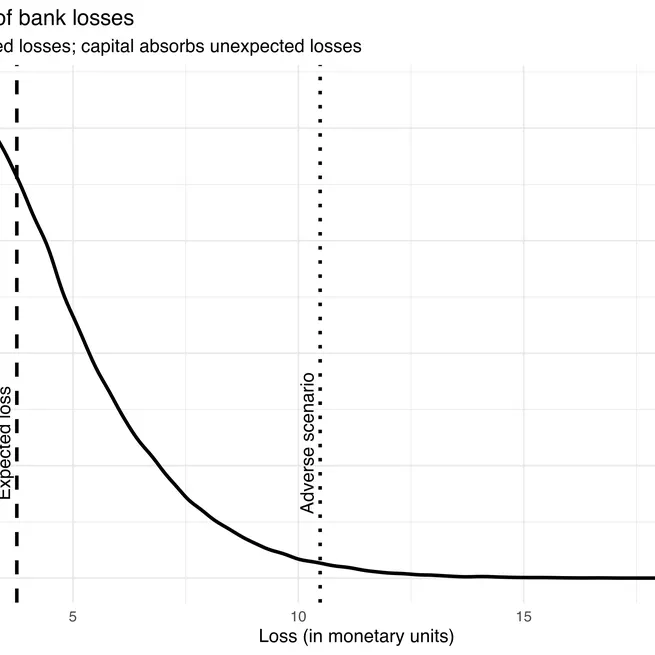
Are Bolivian Banks Solvent? An Introduction to the Problem of Capital Adequacy
Are Bolivian Banks Solvent? The short answer is that they meet local regulatory requirements, but this does not exhaust the analysis. This post explains how the Capital Adequacy Ratio works, why the quality of capital matters, and how the way assets are weighted can change the interpretation of solvency. The case of BUN stands out because it combines the lowest CAP with the least regulatory density. The conclusion is that Bolivia should move towards a more internationally comparable prudential framework.
May 7, 2026
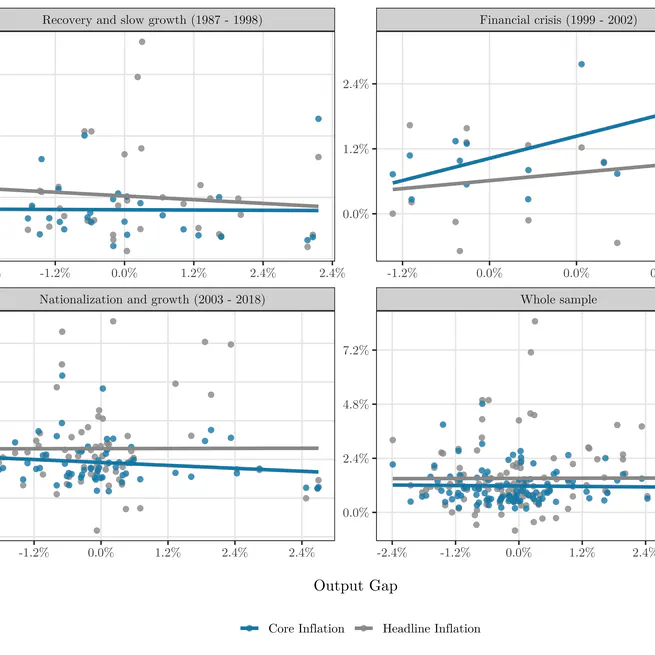
Regional Phillips Curve in a Small Open Economy: Evidence from Bolivia
This paper estimates the relationship between inflation and the output gap at the departmental level in Bolivia, using quarterly data for the period 1993–2019. Despite substantial subnational variation, the association between inflation and economic slack is small and statistically indistinguishable from zero. This result holds across multiple specifications, including estimators that control for common factors and allow for regional heterogeneity. Even when separating tradable and non-tradable inflation, the relationship remains weak. The evidence suggests that inflation dynamics in Bolivia exhibit a strong common component and limited sensitivity to regional cyclical conditions, with important implications for understanding monetary policy transmission in a context of elevated inflation and institutional constraints.
Feb 27, 2026
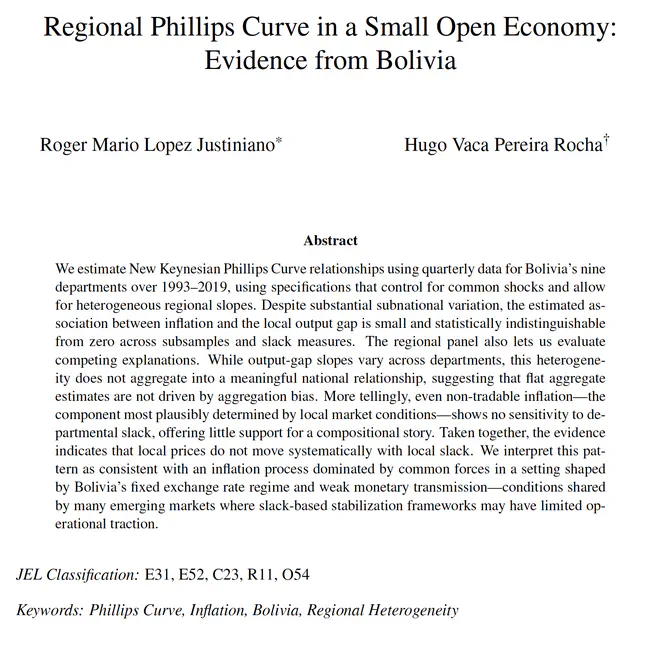
Regional Phillips Curve in a Small Open Economy: Evidence from Bolivia
Feb 25, 2026
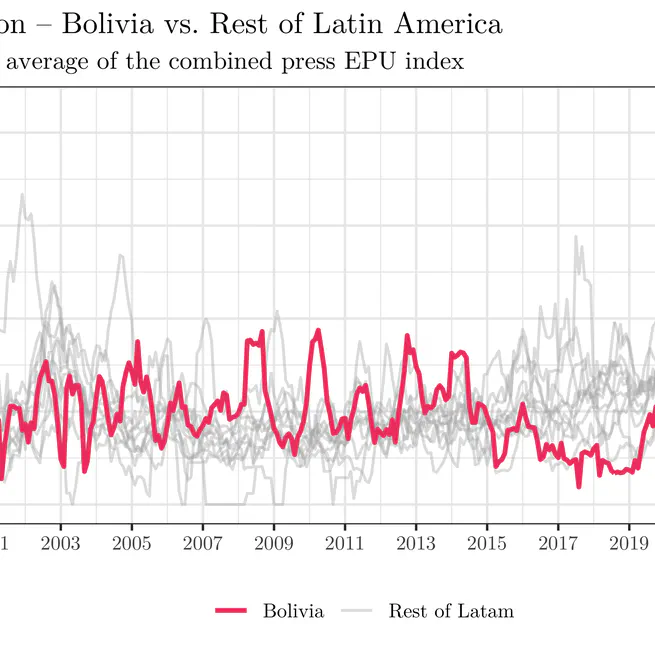
Economic uncertainty in Bolivia: recent evidence from the EPU index
In this post I analyze the Economic Policy Uncertainty (EPU) Index recently published for Bolivia and other Latin American countries by the Bank of Spain. Using these data, I explore the recent evolution of economic uncertainty in Bolivia, its comparison with the rest of the region, and its possible relationship with recent political events. The results suggest that Bolivia remains among the countries with relatively high levels of uncertainty, reinforcing the importance of predictable economic policies and institutional frameworks based on clear rules. Reducing discretion in public policy can help strengthen economic confidence and create more favorable conditions for investment and growth.
Feb 4, 2026
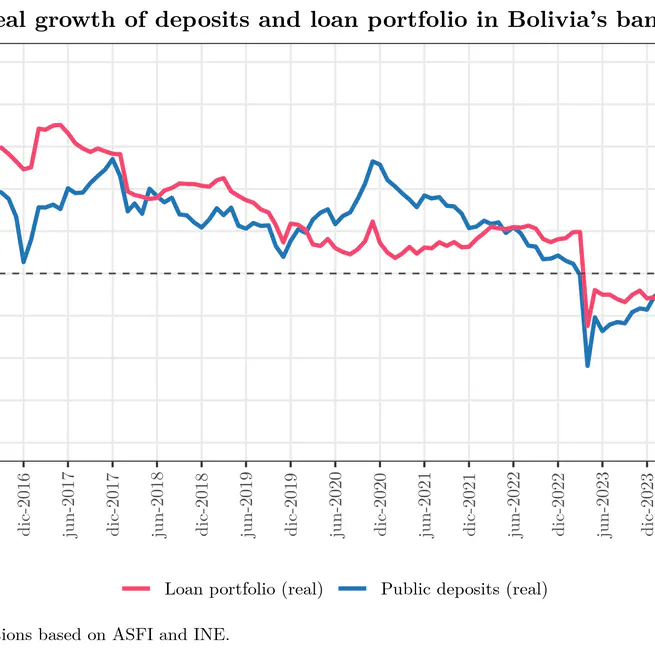
Banking in Bolivia as of September 2025: Between Real Contraction, Short-Term Positioning, and Exposure to the Public Sector
As of September 2025, the Bolivian banking system is operating in a defensive mode amid a fragile macroeconomic environment: the balance sheet expanded by +3.6% in nominal terms (≈ USD 1.479 billion at the official exchange rate), but credit and deposits contracted in real terms. Growth is concentrated in short-term liquid assets —cash and temporary investments— with greater exposure to the BCB and a rebound in account 124 (TGN), while loan portfolio growth has slowed. Funding has become more volatile, with a declining share of time deposits and increased reliance on savings and current accounts, in a context of USD scarcity and a “dual” exchange market. Asset quality remains under strain due to the reprogrammed portfolio (~15%), the main driver of non-performing loans. Despite a positive and recovering ROE, margins are under pressure (regulated lending rates and the need to raise deposit rates), reflecting reduced financial intermediation and growing dependence on the BCB for liquidity management.
Oct 30, 2025
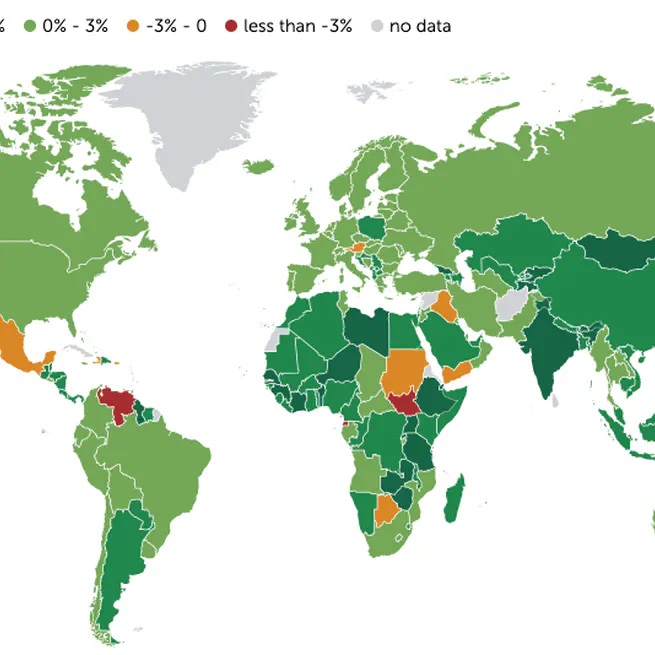
Extracting Data from the IMF DataMapper API in R
This article shows how to extract economic data from the IMF using its DataMapper API, with `R` functions to organize and analyze information on indicators and countries. Applications are illustrated with Bolivia and Spain, demonstrating how to access structured data such as GDP growth, unemployment, inflation, fiscal balance, and public debt.
Sep 29, 2025
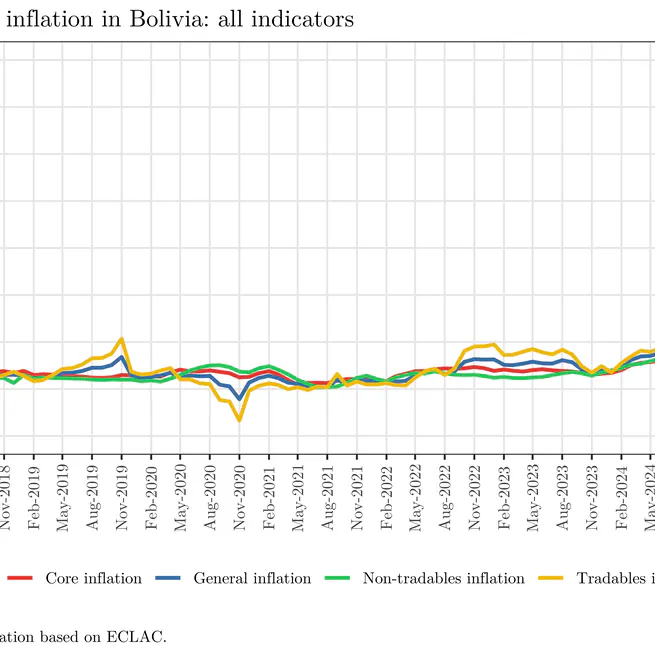
Data Extraction from ECLAC in R and Application to Inflation in Bolivia
This article explores data extraction from ECLAC and its application to the analysis of inflation in Bolivia, using the R programming language to access relevant economic data. As of August 2025, Bolivia’s year-on-year inflation ranges from 16.05% (non-tradable goods) to 30.43% (tradable goods).
Sep 20, 2025
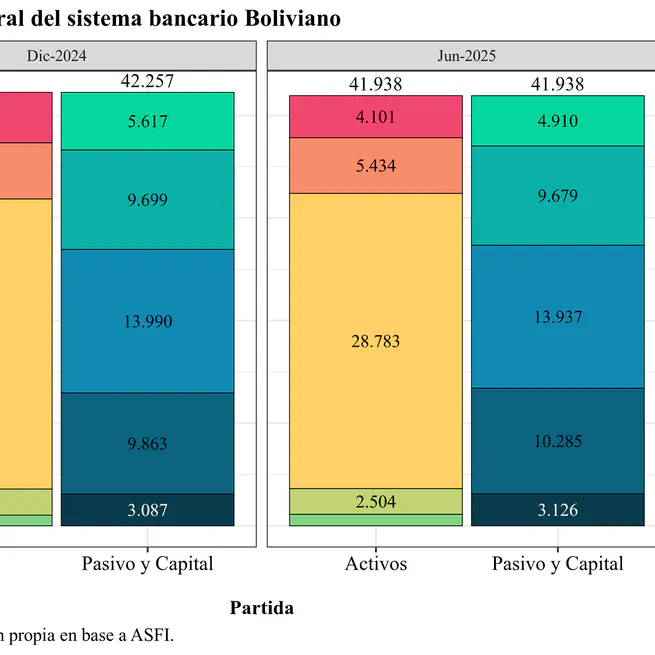
Banking in Bolivia as of June 2025: Beginning to Finance the Treasury?
As of June 2025, the Bolivian banking system maintains a defensive strategy in response to a deteriorating macroeconomic environment. Balance sheet expansion is concentrated in temporary investments, mainly in instruments issued by the BCB and now also by the TGN, to the detriment of credit, whose growth is slowing and showing higher risk, especially in reprogrammed loans. Bank funding is becoming more volatile, with less reliance on term deposits and increasing dependence on savings and checking accounts. Although profitability is improving, it is doing so through low-risk, highly liquid assets, reflecting reduced financial intermediation and growing dependence on the BCB.
Aug 1, 2025
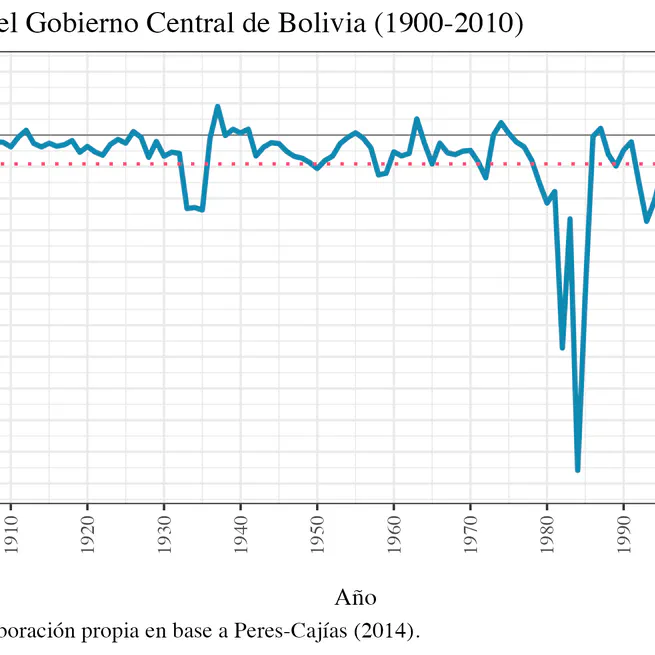
Bolivia: A History of Fiscal Incontinence
In recent years, Bolivia has experienced a persistent inability to maintain fiscal balance, exacerbated by its dependence on extraordinary revenues from natural resources. Moreover, in recent months, inflation has accelerated, surpassing double digits. This post analyzes, from a historical perspective, how recurring fiscal deficits and their financing through the Central Bank have contributed to inflationary cycles. Based on this diagnosis, two concrete proposals are presented—a fiscal rule and the reform of Article 22 of the BCB Law—as complementary measures to strengthen macroeconomic sustainability.
May 20, 2025